
Data Engine
Govern Data
Organize data with clear boundaries, ownership, structure, and routing so teams can scale, meet compliance requirements, and reduce operational risk without slowing delivery.
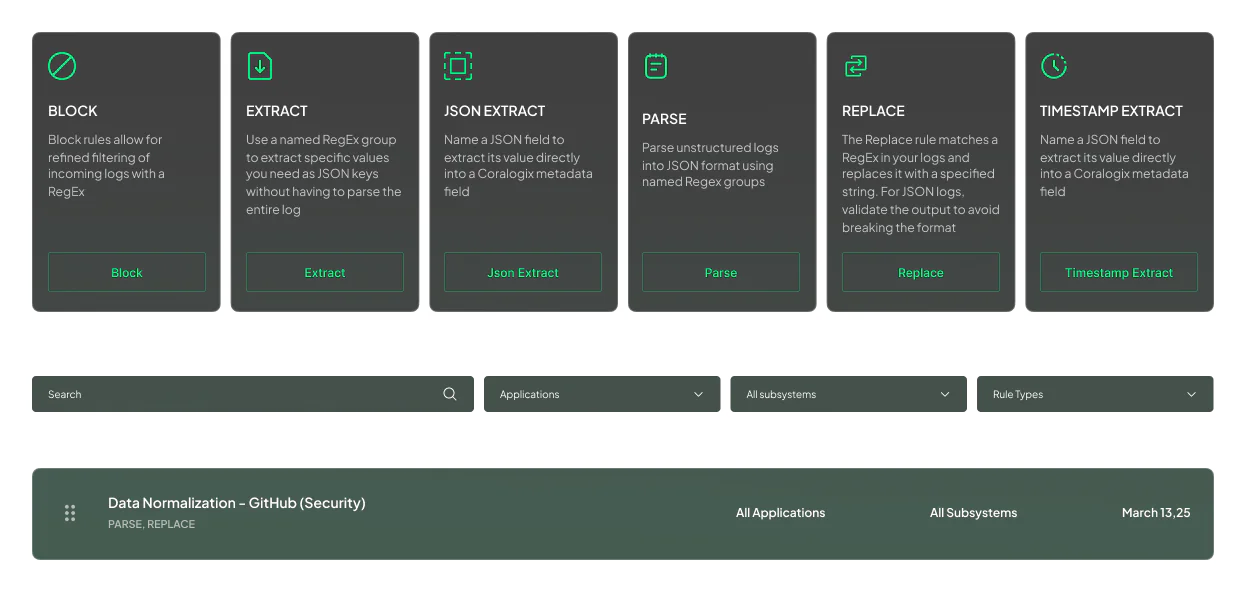
Control structure, ownership, and access, at scale.

Control ownership at scale
Organize data by team, service, or business domain with clear boundaries and permissions so data stays reusable and reporting remains stable as you scale.

Reduce risk without blocking teams
Apply governance centrally through structured routing and policies. Meet security and compliance requirements while teams keep shipping fast.

Consistent structure teams can trust
Protect critical fields and standardize schemas and metrics definitions so dashboards, alerts, and shared workflows stay reliable as teams and services scale.
Segment data by boundaries that matter
Dataspaces and Datasets
Group data into datasets aligned to teams, environments, services, or domains, to isolate noise, enforce access/retention/quotas, and improve query speed with smaller, purpose-built datasets.
Stream data to your ecosystem
Forwarders
Route data to the right destinations, internally or externally, based on policy, supporting compliance and case-specific retention, enabling an open, portable data architecture that reduces vendor lock-in.
Find and fix inconsistent fields
Schema Explorer
Automatically detect duplicate or conflicting field names, analyze how fields are used over time, and align them into a more consistent schema across teams and services.
Enforce data allocation by entity type
Quota Rules
Reserve ingest capacity for the data that matters most, define clear limits by entity type, and keep growth aligned with policy—without waiting until after the fact to enforce control.
Protect the fields that matter most
Reserved Fields
Define important fields and their data types so they are always available for querying, alerts, and dashboards, without depending on ingestion order.
Monitor and operationalize metrics usage
Metrics Explorer
A no-code UI to explore Prometheus-compatible metrics. Discover metrics, labels, and values fast, drill into anomalies to find root cause, and auto-generate PromQL for alerts and dashboards, helping standardize metric definitions and reuse them across teams.
Apply policy-driven control to where data goes
Routing
Define label-based rules that match alerts and cases to the right destinations, channels, tools, and teams, based on routing logic. Separates alert triggering from delivery so notification behavior can be governed centrally without touching alert configurations.
Read more about Data Engine features
A Complete Guide to Tracking CDN Logs
The Content Delivery Network (CDN) market is projected to grow from 17.70 billion USD to 81.86 billion USD by 2026, according to a recent study. As more businesses...
Logs Are Your Data Platform: Dynamic, Queryable, S3‑Backed
Modern systems move fast. Features ship daily, user behavior shifts hourly, and risks surface in...

